

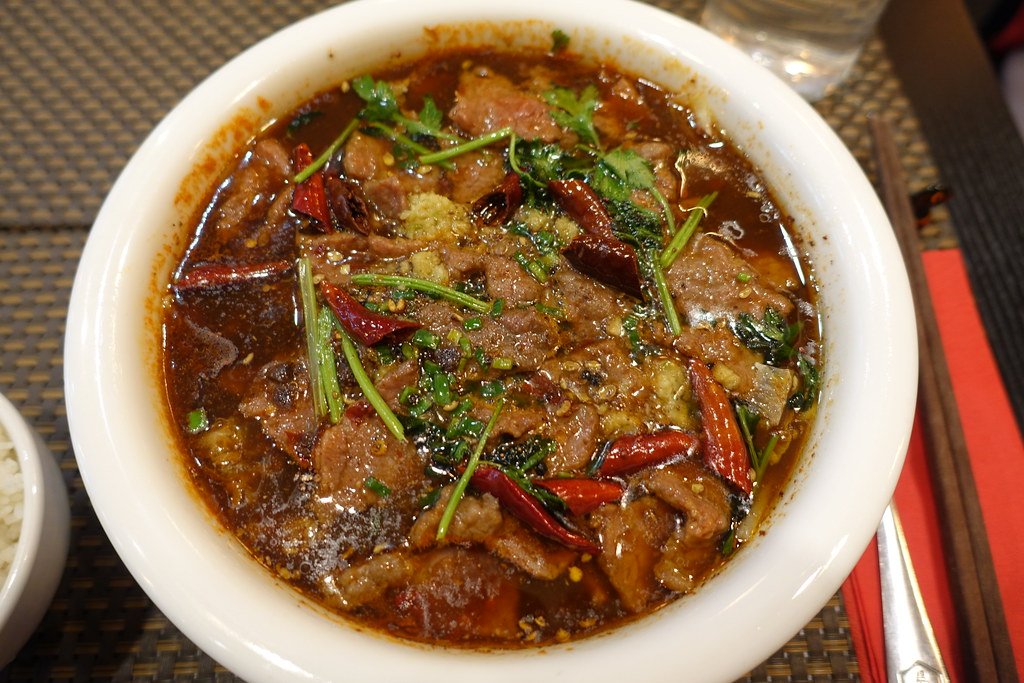
Water-boiled beef in chili sauce
Water-boiled beef in chili sauce—called Shuǐ Zhǔ Niú Ròu in Chinese—is a famous Sichuan (Szechuan) dish known for its mala flavor, meaning it’s both numbing (má) and spicy (là).Despite the name, it’s not just plain “boiled beef.” Here’s what it’s all about:Main ingredient: Thinly sliced beef, often marinated briefly so it stays tender.Cooking method: The beef is “poached” (not fried) in a flavorful broth, often made with chili bean paste (doubanjiang), Sichuan peppercorns, garlic, ginger, and dried chilies. The “water-boiled” part actually refers to this poaching process, which locks in the beef’s tenderness.Serving style: The beef and broth are poured over a base of blanched vegetables (like napa cabbage, bean sprouts, or celery). Then, a generous amount of ground chili and Sichuan peppercorns are sprinkled on top, followed by hot oil being poured over everything. This creates a fragrant, sizzling aroma that’s signature to Sichuan cuisine.Flavor: Deep, rich, spicy, numbing, and aromatic—balanced by the freshness of the vegetables underneath.
Click below the individual ingredient link to shop on Amazon.
As an Amazon Associate, we may earn commissions from qualifying purchases.
As an Amazon Associate, we may earn commissions from qualifying purchases.
Ingredients
For the Beef & Marinade
- 1 lb beef sirloin flank, or tenderloin—thinly sliced across the grain
- 1 tablespoon light soy sauce
- 1 tablespoon Shaoxing wine
- 1 teaspoon cornstarch
- ½ teaspoon salt
- 1 tablespoon oil
For the Broth
- 2 tablespoons doubanjiang (Sichuan chili bean paste)
- 2 tablespoons chili oil (adjust to heat preference)
- 4 cups chicken stock or beef stock
- 1 tablespoon garlic minced
- 1 tablespoon ginger minced
- 1 tablespoon dried chili flakes or crushed dried red chilies
- 1 teaspoon ground Sichuan peppercorns (plus more for topping)
For the Vegetables (base)
- 2 cups bean sprouts
- 1 cup Napa cabbage or bok choy, chopped
- 1 stalk celery in thin slices
For the Topping
- 2 tablespoons garlic minced
- 3–4 tablespoons chili flakes (to taste)
- 1 tablespoon roasted Sichuan peppercorns (lightly crushed)
- 3 tablespoons peanut oil hot or vegetable oil

Instructions
Marinate the Beef
- Mix beef slices with soy sauce, Shaoxing wine, cornstarch, salt, and oil. Let rest for 15–20 minutes while preparing everything else.
Prepare the Vegetables
- Blanch bean sprouts, cabbage, and celery briefly in boiling water until just tender (30–60 seconds). Drain and place them as a bed in a large heat-resistant serving bowl.
Make the Broth
- Heat a wok or large pan over medium heat. Add doubanjiang and chili oil, stir-frying until fragrant and the oil turns red (about 1 minute).
- Add minced garlic, ginger, chili flakes, and ground peppercorns; stir briefly. Pour in the stock and bring to a boil.
Cook the Beef
- Lower heat to simmer. Add the marinated beef slices in small batches, stirring gently so they don’t clump. Cook only until they turn color—about 1 minute. You want them tender, not overcooked.
Assemble
- Pour the entire contents—beef and broth—over the vegetables in the serving bowl.
Finish with the Topping
- Sprinkle minced garlic, chili flakes, and crushed Sichuan peppercorns evenly on top of the beef.
- Heat the 3 tablespoons of oil until just smoking, then carefully pour it over the toppings—it should sizzle and release a wonderful aroma.
Disclaimer
Some parts or all of recipe maybe AI-generated. Recipe pictures are examples of recipe and represent no affiliation with photographer.
Nutrition
Calories: 491kcal (25%)Carbohydrates: 23g (8%)Protein: 35g (70%)Fat: 30g (46%)Saturated Fat: 6g (38%)Polyunsaturated Fat: 7gMonounsaturated Fat: 16gTrans Fat: 0.01gCholesterol: 71mg (24%)Sodium: 1139mg (50%)Potassium: 1058mg (30%)Fiber: 6g (25%)Sugar: 7g (8%)Vitamin A: 2543IU (51%)Vitamin C: 15mg (18%)Calcium: 114mg (11%)Iron: 5mg (28%)
Disclaimer
Nutritional information for this recipe is an approximation and is not to be construed as medical advice.
 Promotions Kitchenware
Map Recipe
Promotions Kitchenware
Map RecipeDiscover more from MenuCulture
Subscribe to get the latest posts sent to your email.