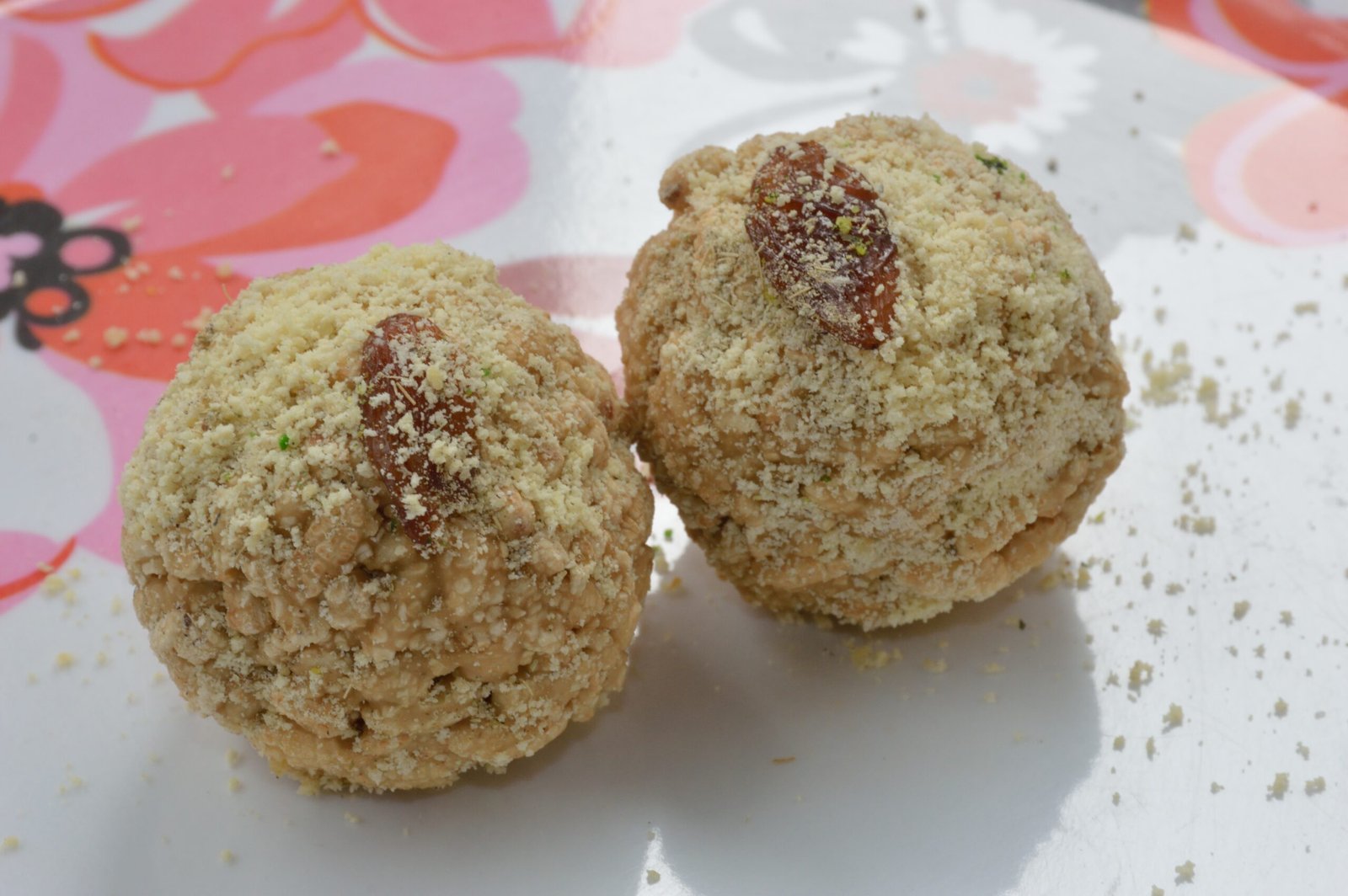
Joynagarer Moa
Joynagarer Moa is a famous traditional Bengali sweet that comes from the town of Joynagar in the South 24 Parganas district of West Bengal, India. It’s a seasonal delicacy, usually made only during the winter months—because its key ingredient, a special variety of date palm jaggery called nolen gur (or khejur gur), is available fresh only at that time.Here’s what makes Joynagarer Moa special:It’s made from kanakchur khoi (a fragrant, puffed rice unique to the region), nolen gur, and ghee, often mixed with date nuts or coconut.The sweet has a soft, crumbly texture and a rich, caramel-like aroma from the jaggery.Authentic Joynagarer Moa is geographically tagged with a GI (Geographical Indication) status, meaning only the ones made in and around Joynagar using traditional methods can legally bear that name.
Click below the individual ingredient link to shop on Amazon.
As an Amazon Associate, we may earn commissions from qualifying purchases.
As an Amazon Associate, we may earn commissions from qualifying purchases.
Ingredients
Ingredients
- 2 cups Kanakchur khoi (fragrant puffed rice)
- 1 cup Nolen gur (date palm jaggery), grated or chopped
- 2 tbsp Ghee (clarified butter)
- ¼ cup Khir er chhana (milk solids or mawa), optional, for richness
- 2 tbsp Cashew nuts chopped
- 2 tbsp Grated coconut optional but traditional
- 1 tsp Poppy seeds (posto), optional, for aroma

Instructions
- In a heavy pan, melt the nolen gur over low heat with 1 tbsp of water.
- Keep stirring until the jaggery thickens slightly—soft-ball consistency (if you drop a little in water, it should form a soft lump).
- In a bowl or large plate, mix the khoi, cashew nuts, grated coconut, and poppy seeds.
- Warm the ghee lightly and drizzle it over the mixture.
- Pour the hot jaggery syrup onto the mixture.
- Quickly mix well with a greased spatula or your hands (careful—it’s hot!).
- While still warm, shape the mixture into small balls (moa). You can grease your palms with ghee to prevent sticking.
- Let the moa cool completely.
- Store in an airtight container; these are best eaten fresh, within 3–4 days.
Kanakchur khoi has a delicate fragrance that’s signature to Joynagarer Moa—if unavailable, use the freshest puffed rice you can find, though the flavor won’t be quite the same.
Always work quickly; once the jaggery cools, it hardens, making shaping difficult.
Some traditional makers also add little bits of narkel chhonto (candied coconut pieces) for texture.
Disclaimer
Some parts or all of recipe maybe AI-generated. Recipe pictures are examples of recipe and represent no affiliation with photographer.
Nutrition
Calories: 353kcal (18%)Carbohydrates: 59g (20%)Protein: 2g (4%)Fat: 12g (18%)Saturated Fat: 7g (44%)Polyunsaturated Fat: 1gMonounsaturated Fat: 3gCholesterol: 19mg (6%)Sodium: 2mgPotassium: 60mg (2%)Fiber: 1g (4%)Sugar: 51g (57%)Vitamin C: 0.1mgCalcium: 31mg (3%)Iron: 3mg (17%)
Disclaimer
Nutritional information for this recipe is an approximation and is not to be construed as medical advice.
 Promotions
Kitchenware
Map Recipe
Promotions
Kitchenware
Map Recipe